You listed your degree on your resume. You hit submit. And now you’re wondering the question that quietly nags at almost every applicant during the hiring process.
Do background checks show education?
Here’s the short answer: yes, they often can. But how, when, and how deeply an employer digs into your school history is more nuanced than most people expect.
Some employers never look. Others verify every line. And a surprising number only care about one thing: whether the degree you claimed actually exists.
That gap between what people fear and what actually happens is where the anxiety lives.
Let’s break down exactly what happens behind the scenes so you know what to expect, whether you’re an applicant sweating a pending report or the person doing the hiring.
So, Do Background Checks Show Education?

Yes. A background check can absolutely reveal your education history when an employer chooses to verify it.
But notice the phrasing there: when an employer chooses to verify it.
Education verification is not automatic. It’s a specific service that a company requests as part of a broader screening package. Some employers include it. Many don’t.
Here’s what that means for you.
A basic criminal background check will not show your education. It’s looking at court records, not classrooms. To confirm a degree, an employer has to order a separate education verification component.
When they do, the check typically confirms:
- The school or university you attended
- Whether you actually enrolled
- The dates you attended
- The degree, diploma, or credential you earned
So the honest answer to “do background checks show education” is that they can and frequently do, but only when the employer specifically asks for that verification.
Think of it like ordering off a menu. A background check isn’t one fixed dish. It’s a set of components an employer selects, and education verification is one of those optional items.
That’s why two people applying for two different jobs can have wildly different experiences. One never hears a word about their schooling. The other gets a call from a screening firm asking for their student ID number.
Now let’s look at how it actually works.
How Education Verification Actually Works
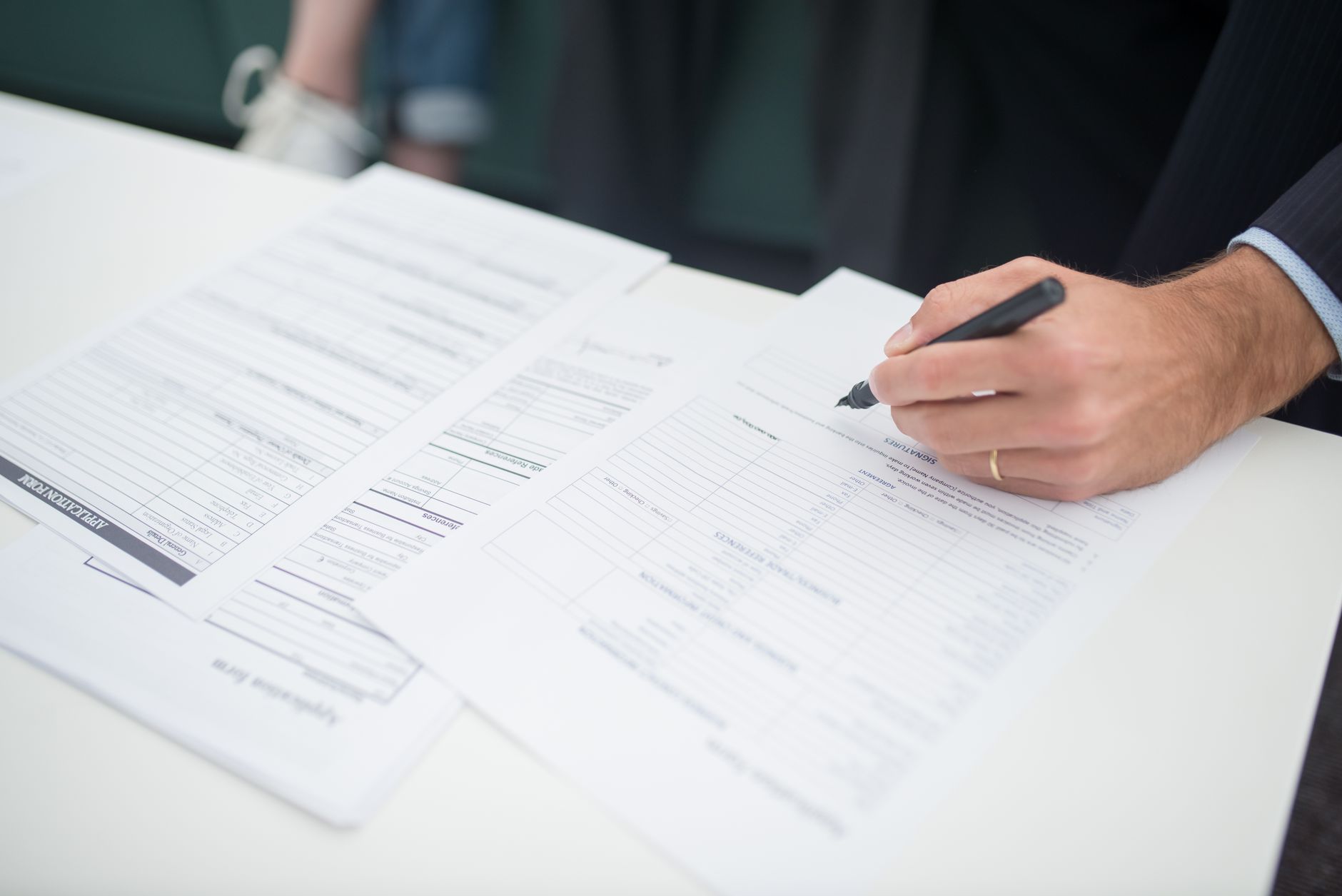
Education verification is exactly what it sounds like. It’s the process of confirming that the schooling you claimed on your resume or application is real.
Here’s the step-by-step of what usually happens.
First, you provide your education details. This might be on your application, your resume, or a separate authorization form. You’ll typically list the institution, the dates, and the degree.
Second, the screening provider contacts the source. That source is usually the school’s registrar office or a third-party clearinghouse that schools use to release verification data.
Third, the source confirms or corrects the details. Did you attend? Did you graduate? What degree was conferred? The answers come straight from the institution, not from a database guess.
That last point matters.
Unlike criminal records, which can live in public court systems, education records are private. They come directly from the school. This is why education verification is one of the more reliable parts of a background check when it’s done properly.
It also explains why timing varies so much. A responsive registrar can confirm a degree in a day. A slow one, or a small district office, can drag the process out for a week or more.
If you’re an employer trying to understand how to build a screening package that includes verification, our guide on how to obtain a background check walks through the moving parts.
Where the Data Comes From
Most colleges and universities work with a central clearinghouse or maintain their own verification line. Employers or screening companies submit a request, and the institution releases limited, confirmed facts.
High schools work a little differently. Verification there often means calling the school district directly, and response times can vary.
Trade schools, certificate programs, and international institutions add another layer of complexity, which we’ll cover shortly.
The important thing to remember is that no legitimate provider invents education data. They confirm what the institution reports. If a school can’t or won’t respond, the result is often “unable to verify” rather than a false positive.
Why Employers Verify Education in the First Place

You might be wondering why an employer would bother.
The reason is simple: resume fraud is more common than most people assume.
Candidates inflate degrees. They claim schools they briefly attended but never finished. They upgrade an associate’s to a bachelor’s. Some invent credentials entirely.
For certain roles, that’s a dealbreaker.
Think about jobs where a specific degree is legally required or safety-critical: nurses, engineers, accountants, teachers, licensed professionals. If the credential isn’t real, the hire isn’t just risky. It can be illegal or dangerous.
Employers also verify education to protect against negligent hiring claims. If you place someone in a role they weren’t qualified for and something goes wrong, the paper trail matters.
Reputation is on the line too. A high-profile executive exposed for a fake degree can create headlines that haunt a company for years. Verification is cheap insurance against that kind of embarrassment.
The Federal Trade Commission’s guidance for employers using consumer reports reinforces that any background screening must follow the Fair Credit Reporting Act, including education verification handled through a third-party provider.
So verification protects the employer and, frankly, protects honest applicants who told the truth. When everyone plays by the same rules, the candidate who actually earned their degree isn’t undercut by someone who lied about theirs.
What Education Details Show Up on a Background Check
Education Details Typically Confirmed by Background Checks
| Education Detail | Usually Verified? | What It Confirms |
|---|---|---|
| Institution attended | Yes | That the named school or university is real and was attended |
| Dates of attendance | Often | Enrollment start and end dates |
| Degree or diploma earned | Yes | Whether the degree, credential, or diploma was actually awarded |
| Major or field of study | Sometimes | The program or concentration completed |
| Graduation date | Often | When the credential was conferred |
| GPA | Rarely | Grade point average, only if the school releases it and it is requested |
| Individual course grades | Rarely | Not typically included in employment screening |
General industry practice summary compiled for educational purposes. Actual verification scope varies by employer, screening provider, and what each institution releases. Not legal advice.
Let’s get specific about what a background check actually shows regarding your education.
The most common confirmed details are your institution, your dates of attendance, and the degree you earned. Those three make up the core of most verifications.
Some employers request more. Others request less.
Here’s a breakdown of what typically gets confirmed and how often.
As you can see below, the deeper details like GPA and individual grades are rarely part of standard employment screening. Most employers only care whether the degree is real.
Notice how the pattern trends toward confirmation of the essentials rather than a deep dive. Employers generally want a yes or no on the claim, not a transcript audit.
What a Background Check Can and Cannot Show About Your Education
This is where a lot of confusion lives, so let’s clear it up.
A background check can confirm the existence and completion of your education. It cannot magically reveal things the school doesn’t release.
Here’s what a background check can show:
- Whether you attended a specific school
- Whether you earned the degree you claimed
- Your dates of attendance and graduation
- The credential type and, sometimes, your field of study
Here’s what it usually cannot or will not show:
- Detailed transcripts of every course, unless separately requested and released
- GPA, in most standard checks
- Disciplinary records from school, which are protected in most cases
- Reasons you left a program
The takeaway? If you told the truth about your degree, verification is nothing to fear.
If you rounded up or invented something, that’s where the trouble starts.
The same principle applies across many types of background screening. For example, our breakdown of what “decisional” means on a background check shows how a single unverified detail can hold up an entire hiring decision.
And it’s worth stressing: a verification result isn’t a judgment about you as a person. It’s a factual match or mismatch between what you claimed and what the institution reports. That framing keeps the process a lot less scary.
Can a Background Check Show Education You Didn’t List?
Interesting question. Can a background check show education you didn’t put on your application?
Generally, no.
Education verification is a targeted process. The screener verifies what you claimed. They aren’t fishing for schools you never mentioned.
If you listed one degree, they check that one degree. They don’t call every university in the country to see where else you might have enrolled.
So if you have education you’d rather not discuss, leaving it off your resume typically means it won’t surface through standard verification.
That said, be careful.
If a role requires a credential and you left off the schooling that proves you have it, you may simply fail to qualify. And if you claimed a degree you don’t have, the verification will catch the gap.
There’s also the honesty factor. Even if an omission wouldn’t be caught, some application forms ask you to attest that you’ve disclosed all relevant education. Misrepresenting that can create problems separate from the background check itself.
How Far Back Does Education Verification Go?
Unlike some criminal record reporting, education verification isn’t limited by a lookback window.
A degree you earned twenty years ago is just as verifiable as one from last spring. Schools keep records for decades.
So when people ask whether a background check will find an old degree, the answer is usually yes. Age doesn’t erase your academic record.
The one wrinkle is closed institutions.
If a school shut down, merged, or lost its records, verification can get complicated. In those cases, screeners may accept alternate documentation like a diploma or official transcript you provide directly.
This is one reason to hold onto your original documents. A diploma tucked in a drawer for two decades can suddenly become the fastest path to confirming a credential when a school no longer exists.
What Happens If Your Education Can’t Be Verified?
Here’s a scenario that trips people up.
You told the truth. You earned the degree. But the verification comes back “unable to confirm.”
It happens more than you’d think.
Sometimes the school’s records list a slightly different name. Maybe you attended under a maiden name. Maybe the dates you remembered are off by a semester. Maybe the registrar is slow to respond.
None of that means you lied.
A good employer and a compliant screening provider will give you a chance to clear it up. Under the FCRA, if information in a consumer report could lead to an adverse decision, you have rights.
The FTC’s overview of employer background checks and your rights explains that you’re entitled to be notified and given a copy of the report before an employer takes adverse action based on it.
So if your education can’t be confirmed, don’t panic. Provide your diploma, transcript, or student ID number to help the school locate your record.
Proactive candidates often solve this in minutes. Call your school’s registrar, ask how they respond to verification requests, and note any name or date discrepancies before the screener even reaches out. A little preparation prevents a false alarm from stalling your offer.
Education Verification and Compliance Rules Employers Should Know
If you’re an employer, education verification isn’t a free-for-all. It’s governed by the same rules as the rest of your background screening program.
Let’s walk through the essentials without wandering into legal advice.
First, get consent. Before running any background check that includes education verification through a third party, you generally need written authorization from the applicant.
Second, follow the FCRA adverse action process. If you decide not to hire someone based partly on a verification result, there’s a required sequence: pre-adverse notice, a copy of the report, time to respond, then a final notice.
Third, stay consistent. Apply the same verification standards to similarly situated candidates. Inconsistency can create discrimination exposure.
The EEOC’s joint guidance with the FTC on background checks emphasizes applying screening policies evenly and using job-related criteria. Education requirements should genuinely relate to the role.
Fourth, be mindful of degree requirements themselves. Requiring a degree that isn’t necessary for the job can, in some contexts, raise fairness concerns. That’s a policy question worth discussing with qualified counsel.
Fifth, document your process. If a verification ever leads to a dispute, being able to show a consistent, authorized, well-timed procedure is far better than reconstructing what happened after the fact.
Do Background Checks Show Education for Every Job?
No, and this surprises people.
Not every job triggers education verification. So when someone asks “do background checks show education” for their specific position, the answer depends heavily on the role.
Entry-level, hourly, and many gig-style positions often skip education verification entirely. The employer cares about identity, work eligibility, and sometimes criminal history, but not your diploma.
Professional, licensed, and senior roles are a different story. There, verification is common and sometimes mandatory.
So the honest framing is this: whether a background check shows your education depends on what the employer decides to check, which usually tracks the seniority and requirements of the role.
If you’re an employer building a role-appropriate package, thinking through scope early saves time. Our overview of a Level 2 background check shows how deeper screening tiers work for higher-trust positions.
Common Myths About Education on Background Checks
Let’s bust a few myths, because misinformation runs wild on this topic.
Myth 1: A background check automatically pulls your entire academic transcript. False. Standard employment verification confirms attendance and degree, not every grade you ever received.
Myth 2: Employers can see disciplinary actions from school. Generally false. Educational disciplinary records are typically protected and not part of employment verification.
Myth 3: An unfinished degree looks the same as a finished one. False. Verification distinguishes between “attended” and “graduated.” Claiming a completed degree you didn’t finish is a common way people get caught.
Myth 4: Old degrees can’t be verified. False. Schools keep records for decades. Age doesn’t hide your academic history.
Myth 5: If I leave a school off my resume, they’ll find it anyway. Usually false. Verification checks what you claimed, not what you omitted.
Myth 6: A slow verification means the employer thinks I’m lying. False. Delays usually mean the school is slow to respond, not that anyone doubts you.
See the pattern? Most fear comes from misunderstanding. Honesty on your application is the best strategy.
Does a Background Check Show Education From International Schools?
This is a growing question as workforces globalize.
Does a background check show education earned outside the United States? It can, but it’s harder.
Verifying international education involves language barriers, different record systems, time zones, and institutions that may not respond to U.S. screening firms.
Because of this, employers sometimes ask candidates to provide official documentation or use specialized international verification services.
If you earned a degree abroad, keep your official documents handy. They can dramatically speed up verification and prevent an “unable to confirm” result that has nothing to do with dishonesty.
Some candidates also obtain a credential evaluation that translates a foreign degree into its U.S. equivalent. If your role or industry commonly requires this, doing it early can smooth the entire process.
How to Prepare for an Education Verification
Whether you’re an applicant or an employer, a little preparation goes a long way.
If you’re an applicant, here’s your checklist:
- List your education accurately, including exact school names and correct degree titles
- Double-check your dates of attendance and graduation
- Note any name changes since you attended
- Keep a copy of your diploma or transcript in case the school is slow to respond
- Don’t inflate, round up, or invent credentials
If you’re an employer, here’s yours:
- Decide whether education verification is genuinely necessary for the role
- Get written authorization before running the check
- Use a reputable screening partner that verifies with the source institution
- Follow FCRA adverse action steps if a result affects your decision
- Apply your standards consistently across candidates
Preparation removes friction. It also protects everyone from avoidable delays and disputes.
And it sets the right tone. A candidate who arrives with clean, accurate details signals professionalism. An employer who runs a consistent, respectful process attracts and keeps better talent.
How Education Verification Fits Into the Bigger Background Check Picture
Education is just one slice of the screening pie.
A comprehensive background check might include identity verification, employment history, criminal records, and education, all bundled together or ordered separately.
Each component follows its own rules and pulls from its own sources. Criminal records come from courts. Employment history comes from past employers. Education comes from schools.
Understanding that separation helps you make sense of your results. If your criminal check is clean but your education is “pending,” that’s not a red flag. It just means the school hasn’t responded yet.
This is also why timelines differ. A criminal search may finish instantly while an education check waits on a human at a registrar’s desk. Neither status affects the other.
The key is choosing a screening process that’s accurate, compliant, and fair to candidates.
That’s exactly where a modern screening platform earns its keep.
Get Education Verification Right Before Your Next Hire
Here’s the bottom line. Do background checks show education? Yes, when the employer verifies it, and when they do, accuracy and compliance matter enormously.
A single unverified degree can stall a hire. A single missed FCRA step can create real exposure. And a slow, sloppy verification process frustrates great candidates who told the truth.
You don’t have to guess your way through it.
ClearCheck helps employers run fast, accurate, compliance-aware background checks, including education verification handled the right way. Stop letting verification delays cost you top talent.
Start your accurate education verification with ClearCheck today
This article is for general informational purposes only and is not legal advice. Background check laws vary by state and situation. Consult qualified counsel for guidance specific to your circumstances.