In 2007, the Massachusetts Institute of Technology made a painful discovery: their beloved Dean of Admissions, Marilee Jones, had fabricated all three of her academic degrees. Jones had held the position for 28 years. She gave speeches about honesty in college applications. She co-authored a bestselling book on college admissions.
Not a single background check had ever caught the lie.
That story gets cited a lot in hiring circles — and for good reason. But here’s the part most people miss: the FBI was never going to catch it either.
Understanding how to get an FBI background check is genuinely useful — and there are specific situations where it’s exactly the right tool. But the FBI’s Identity History Summary is built for a narrow purpose: providing individuals with their own federal criminal record for immigration, adoption, international licensing, and similar government-facing needs.
For employers trying to verify credentials, criminal history, employment records, and civil findings across all 50 states? The FBI check is the wrong tool. And that distinction matters enormously.
This guide covers both sides of that story — the full step-by-step process for requesting an official FBI background check, and the critical moment where employers need to pivot to something more practical, faster, and far more comprehensive.
What Is an FBI Background Check?
Before diving into the how, let’s get the what exactly right.
An FBI background check is officially called an Identity History Summary (IdHS) — commonly referred to as a “rap sheet.” It’s a criminal history record compiled by the FBI’s Criminal Justice Information Services (CJIS) Division in Clarksburg, West Virginia.
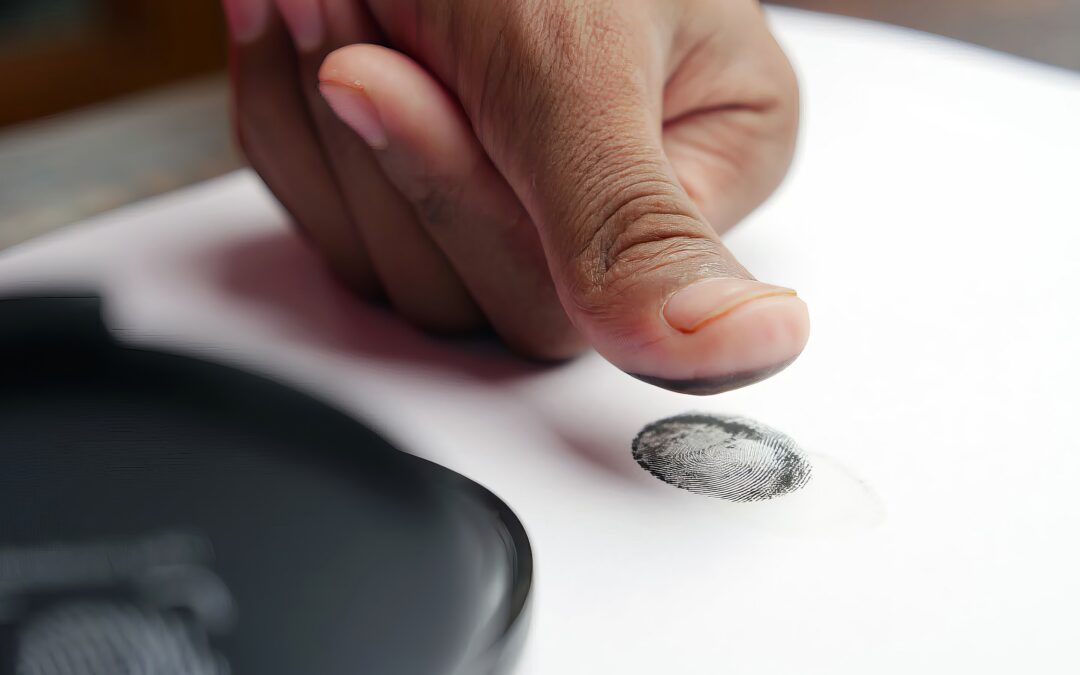
Here’s what makes it distinct from other background checks: it’s fingerprint-based, not name-based. Rather than searching records by name and date of birth, an FBI Identity History Summary ties criminal records directly to your unique biometric fingerprint data. That single feature makes it far more accurate for identity matching than a standard name-based search.
The record pulls from the FBI’s Next Generation Identification (NGI) System, which contains arrest and conviction information submitted from:
- Federal law enforcement agencies
- State and local police departments nationwide
- U.S. territories
- Certain international submissions from participating foreign agencies
What does it show? The FBI Identity History Summary typically includes arrest records, charges, and final dispositions (conviction, acquittal, dismissal) that have been submitted to the FBI by contributing law enforcement agencies. If no record is found, the report will state clearly that no arrest record exists — which is itself a meaningful, official document for many purposes.
What doesn’t it show? State-level and county-level records that were never submitted to the FBI. Employment history. Education credentials. Civil records. Financial history. Driving records. And critically — any criminal record from a jurisdiction that doesn’t report to the FBI’s CJIS system, which is more common than most people assume.
How to Get an FBI Background Check: Step by Step
There are two primary methods for requesting an FBI Identity History Summary as a private individual: directly through the FBI or through an FBI-approved channeler agency. Here’s exactly how each works.
Method 1: Request Directly Through the FBI
This is the official, government-direct route. It’s the most authoritative — and the slowest.
Step 1: Complete Form I-783. Download and complete the Identity History Summary Request Form (Form I-783) from the FBI’s CJIS website at fbi.gov. Fill it out completely and legibly — any incomplete or unclear information can delay or invalidate your request.
Step 2: Get fingerprinted. Obtain a standard FBI fingerprint card (Form FD-258). You can get fingerprinted at:
- Local law enforcement agencies (many police departments offer this service)
- Participating U.S. Post Office locations (for electronic submissions)
- Authorized fingerprinting facilities in your area
If submitting electronically, the FBI allows individuals to visit a participating U.S. Post Office location to capture fingerprints digitally as part of their request — which significantly speeds up the process compared to ink card submissions.
Step 3: Prepare your payment. The fee for an FBI Identity History Summary is $18 per request. Payment must be made via money order or certified cashier’s check payable to the U.S. Treasury. Personal checks, business checks, and cash are not accepted and will be destroyed if submitted.
Step 4: Mail your complete package. Send your completed Form I-783, fingerprint card, and payment to:
FBI CJIS Division – Summary Request 1000 Custer Hollow Road Clarksburg, WV 26306
Step 5: Wait for results. Mail submissions are processed in the order received. Expect 8 to 12 weeks for results via standard mail. Electronic fingerprint submissions processed through participating U.S. Post Office locations are generally faster — results may arrive within a few weeks.
Method 2: Use an FBI-Approved Channeler Agency
This is the faster route for most individuals, and the one recommended when timing matters.
An FBI-approved channeler is a private organization authorized to receive fingerprint submissions and forward them electronically to the FBI’s CJIS Division. Once the FBI processes the check, the channeler receives the results and delivers them back to you — typically within 1 to 3 business days for electronic submissions.
The process generally works like this:
- Select an FBI-approved channeler from the official list at fbi.gov/identity-history-summary-checks
- Register online and complete the channeler’s enrollment process
- Visit a participating fingerprinting location (many channelers partner with local providers or post office locations)
- Present a valid government-issued photo ID
- Receive your results via secure email link or online portal within days
Total cost: The FBI’s $18 base fee, plus the channeler’s service fee (typically $7–$25, depending on the provider and delivery method). Expect to pay $25–$45 total through most approved channelers for fast electronic processing.
Important: FBI Identity History Summaries obtained through direct requests or personal-use channelers are issued for personal review only. They are not automatically accepted for employment or licensing purposes within the United States. Many employers and licensing agencies require background checks submitted through specific authorized channels — always confirm with the requesting organization before starting the process.

How to Get an FBI Background Check for Specific Purposes
The process above covers the personal review route. But FBI background checks are used in a range of specific contexts — each with its own requirements and channels.
Immigration, Visa, and International Use
If you need an FBI background check for a visa application, foreign residency, or work authorization abroad, the standard personal-use process applies — with one critical addition: apostille authentication.
Many foreign governments require an apostille stamp from the U.S. Department of State to confirm the document’s authenticity. The FBI can authenticate your Identity History Summary before you request the apostille from State. Note: you must request authentication as part of your original FBI submission — the FBI will not authenticate previously processed results separately.
Processing time for international-use requests should be built into your application timeline, particularly if mail submission is required in your destination country.
Adoption
Both domestic and international adoptions often require FBI background checks for all adults in the household. For domestic adoption, the FBI check is typically submitted through your state’s licensing agency or adoption service provider. For international adoption, an apostilled FBI record is commonly required as part of the foreign government’s home study documentation.
Federal Employment and Security Clearances
Federal agencies and positions requiring security clearances conduct their own fingerprint-based background checks through authorized channels — separate from the personal-use process described above. If you’re applying for a federal job, your fingerprints and authorization will be collected by the agency’s HR process directly. You do not request an FBI Identity History Summary independently for this purpose.
Professional Licensing Within the U.S.
Many licensed professions — healthcare, law, financial services, education, and others — require fingerprint-based background checks as part of state licensing applications. In most cases, these are submitted through the state licensing board’s designated channeler, not through the FBI’s personal-use process.
For example, the DC Office of the State Superintendent of Education (OSSE) requires all educator credential applicants to submit an Identity History Summary through an FBI-approved channeler — with reports issued within the previous 12 months from the application date. Their guidance at osse.dc.gov provides a helpful institutional model for how licensing bodies integrate FBI checks into credentialing.
Where FBI Background Checks Fall Short for Employers
Here’s where the guidance needs to get honest — because this is where a lot of employers make a costly mistake.
If you’re an employer running pre-employment background checks on job candidates, an FBI Identity History Summary is almost certainly not the right tool. Here’s why.
Coverage gaps are significant. The FBI’s CJIS database is only as complete as what state and local law enforcement agencies have submitted to it. The reality? Many jurisdictions have incomplete reporting pipelines. One analysis found that only 5.5% of U.S. states report the outcome of an arrest at least 90–100% of the time. That means a meaningful percentage of criminal records at the state and county level never make it into the FBI’s database at all.
It’s fingerprint-only — and that’s a logistical barrier. For employers trying to screen multiple candidates quickly, requiring each one to visit a fingerprinting location, complete government forms, and wait for federal processing is operationally impractical. Standard employment screening doesn’t work this way.
It doesn’t cover what employers actually need. A federal Identity History Summary shows criminal history in the FBI’s system. It doesn’t verify employment history, confirm education credentials, search civil records, pull bankruptcy filings, run OFAC sanctions checks, or confirm professional licenses. All of those components are essential to a comprehensive employment screening program — and none of them are part of an FBI Identity History Summary.
Personal-use FBI checks aren’t accepted for most employment purposes. The FBI explicitly notes that a personal-use Identity History Summary is “not provided for the purpose of licensing or employment.” Employers who require fingerprint-based FBI checks for specific regulated roles must use authorized channelers designated by their industry’s regulatory framework.

FBI Background Check vs. FCRA Employment Screening: Key Differences
Understanding the distinction between these two tools is essential for making the right choice.
| Factor | FBI Identity History Summary | FCRA Employment Screening (ClearCheck) |
| Primary purpose | Personal review, immigration, adoption, international licensing | Employment, tenant, volunteer screening |
| Based on | Fingerprints (biometric) | Name + SSN + DOB |
| Criminal coverage | Federal CJIS database (what’s been reported) | National, state, county, and federal records |
| Employment history | ❌ Not included | ✅ Verified |
| Education credentials | ❌ Not included | ✅ Verified |
| Civil records | ❌ Not included | ✅ Available |
| Financial / bankruptcy | ❌ Not included | ✅ Available |
| FCRA compliant | Not designed for employment use | ✅ Fully FCRA compliant |
| Processing time | 1–3 days (channeler) to 8–12 weeks (mail) | As fast as 30 seconds |
| Cost | $18 + channeler fees | From $19.99 |
| Employer-ready report | ❌ Personal use only | ✅ Employer-ready |
The bottom line: if you need a government-issued federal fingerprint record for immigration, international use, adoption, or a specific regulatory requirement that explicitly mandates an FBI IdHS — follow the process above.
If you’re an employer screening candidates for employment, or a landlord screening tenants, or a nonprofit vetting volunteers — an FCRA-compliant background check from a platform like ClearCheck is the right tool.
What Employers Actually Need: Federal Criminal Records Through ClearCheck
Many employers assume “FBI background check” and “federal criminal records check” are the same thing. They’re not.
A federal criminal records search for employment purposes searches the 94 U.S. federal district courts through the PACER (Public Access to Court Electronic Records) database, covering:
- Federal felony convictions
- Federal misdemeanor convictions
- Wire fraud, tax evasion, drug trafficking, kidnapping, embezzlement, counterfeiting, and other federal offenses
- Pending federal criminal cases
This is a standard, FCRA-compliant component of ClearCheck’s professional screening packages — and it’s combined with national, state, and county criminal records, SSN verification, and other verification layers that a standalone FBI Identity History Summary doesn’t provide.
For employers in regulated industries, ClearCheck’s Elite package bundles federal criminal records with civil search, OFAC/terrorist screening, bankruptcy records, professional license verification, and 20-year address history — giving you the comprehensive coverage that actually serves a hiring decision.
ClearCheck’s detailed guide on what a background check shows walks through each component in plain language, including how federal and state records work together to form a complete criminal picture.
For a side-by-side breakdown of what actually appears in a report across each check type, see ClearCheck’s companion guide on what shows up on a background check.
How to Challenge Errors on Your FBI Background Check
If you’ve received your FBI Identity History Summary and found inaccurate information, you have a legal right to dispute it — and the process matters.
Step 1: Identify the specific error. Common issues include arrest records with no disposition listed, records belonging to someone with a similar name, or entries that should have been expunged but still appear.
Step 2: Gather your supporting documentation. Court records showing dismissal, proof of expungement, identity documents demonstrating the record belongs to a different individual — compile everything that directly contradicts the error.
Step 3: Submit a challenge through the FBI’s CJIS Division. The FBI’s official challenge process requires written submission to:
FBI CJIS Division – Summary Request 1000 Custer Hollow Road Clarksburg, WV 26306
Or contact CJIS directly at (304) 625-5590 or identity@fbi.gov.
Step 4: Allow time for investigation. The FBI’s challenge process can take several weeks to several months. If your record is needed urgently — for a visa application, adoption proceeding, or professional license — request it as early as possible and factor in dispute resolution time.
Step 5: Monitor the outcome. The FBI will investigate and notify you of the result. If the error originated with the contributing law enforcement agency, the FBI will refer you back to that agency for correction at the source.
This process parallels the FCRA dispute rights that apply to employment background checks. ClearCheck’s guide on how to run a background check on yourself covers how to review and dispute errors in FCRA reports specifically — a different but equally important process for anyone preparing for employment screening.
Stanford University’s Human Resources department outlines how their employment screening process interacts with dispute rights and adverse action procedures, offering a useful institutional reference at hshr.stanford.edu/hiring/background-checks.
Common Mistakes When Requesting an FBI Background Check
Getting the process right matters — delays are frustrating, and some mistakes cost real money to fix. Here are the most common errors to avoid.
Sending an unacceptable form of payment. The FBI does not accept personal checks, business checks, or cash. Money orders and certified cashier’s checks only. Unacceptable payments are destroyed — not returned.
Submitting a personal-use check for employment purposes. A personal-use IdHS clearly states it is not provided for employment or licensing. Submitting it to an employer who requires an authorized employment background check will not satisfy their requirement.
Incomplete or altered Form I-783. Any modification to the form or missing required fields will cause a processing delay. Complete every section clearly and legibly before submitting.
Unclear fingerprints. Poor quality prints are rejected by the FBI. If your prints are rejected twice, you’ll need to resubmit with a new fingerprint card and a $10 reprocessing fee. Use a professional fingerprinting location rather than DIY ink cards to reduce this risk.
Not confirming what type of check is actually required. Many employers, licensing boards, and foreign governments have specific requirements for the type of background check they accept. Always confirm with the requesting organization before beginning the process — getting the wrong type of check can cost weeks of delay.
Final Thoughts
Knowing how to get an FBI background check is genuinely useful knowledge — for immigration applications, adoption, international employment, or situations where a government-issued federal fingerprint record is specifically required.
But understanding where its limitations begin is just as important.
For employers, landlords, nonprofits, and staffing agencies that need fast, FCRA-compliant, multi-layer screening that covers criminal records at every level alongside employment history, education verification, and civil records — ClearCheck delivers exactly what the FBI Identity History Summary was never designed to provide: comprehensive, employer-ready results in as little as 30 seconds.
Two tools. Two distinct purposes. Knowing which one you actually need is the decision that makes everything else faster.

Don’t Wait Weeks — Get Verified Results in 30 Seconds
An FBI check takes weeks. Your next hire can’t wait that long.
ClearCheck delivers FCRA-compliant employment background checks — including federal criminal records, national and statewide criminal history, SSN verification, and deep employment and education screening — with results in as little as 30 seconds. No fingerprint appointment required. No government mail delays. Just instant, verified data your hiring team can act on today.
Pricing starts at $19.99. Money-back guarantee. No subscription required.
Run Your Background Check Now — Instant Results
ISO 27001:2013 Certified · FCRA Compliant · 22+ Years of Verified Data